Guide 01 · 9 min read
A beginner's guide to choosing your first piece
Most first purchases fail for a boring reason: the piece was chosen by intensity rather than by shape, and it ended up in a drawer. This guide is about avoiding that.

There is a particular kind of advice that dominates this category, and it is almost always about power. More speeds, more patterns, a stronger motor, a longer battery. None of it answers the question a first-time buyer actually has, which is: what will I still be using in six months?
The answer has less to do with specification than with three practical things — shape, material, and where the object will live. Get those right and almost any decent device will work. Get them wrong and the best-reviewed piece on the market will end up behind a stack of socks.
Start with shape, not intensity
Vibration is distributed across the surface that touches the body. A broad shape spreads it over a larger area, which reads as slower and more diffuse; a narrow shape concentrates it into a smaller point, which reads as sharper and more localised. This single geometric fact explains most of the difference between two devices that otherwise look similar on a specification sheet.
For a first piece, the broad shape is usually the easier purchase — not the smallest one, which is the common mistake. Small devices concentrate vibration into a small contact area, and for someone who has not yet worked out what they like, that intensity is harder to modulate. A wider shape gives you room to move, and moving is how you find out.
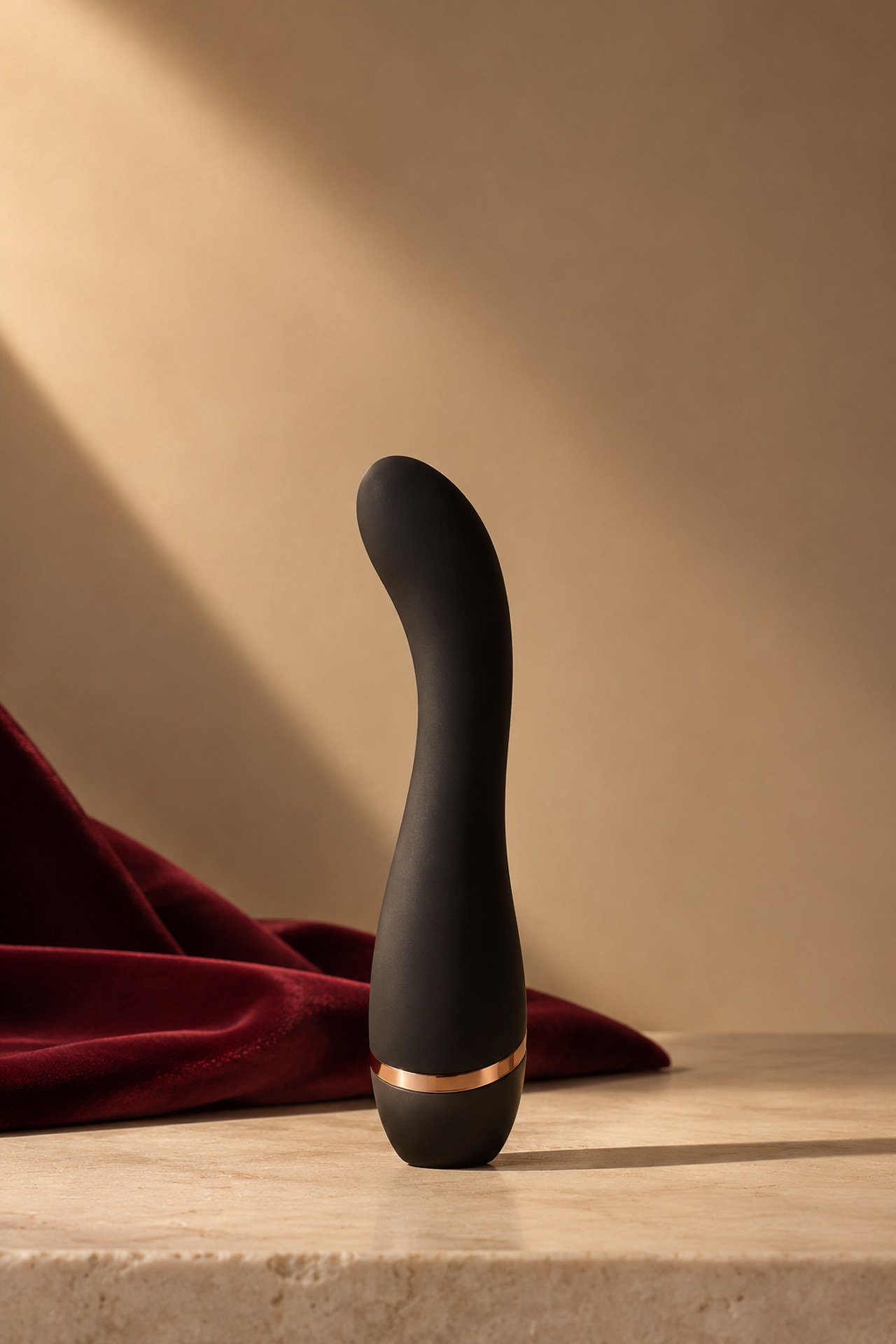
There is a second geometric consideration that rarely gets mentioned: the base. A device that stands upright on a flat surface can live on a shelf or a nightstand without a stand or a bag. A device that rolls has to be stored somewhere, and the somewhere is usually a drawer. Over a year, the object that stands up gets used considerably more often than the one that does not, and this has nothing to do with how it performs.
Material decides how it feels in a month
Silicone is soft, warms quickly, and is available in a matte finish that does not show fingerprints. It is also the material most likely to attract dust, and cheaper silicone blends can develop a tacky surface over time, particularly if they are stored against other silicone items. Platinum-cured silicone is the version worth paying for: it is more stable, has no odour, and does not degrade in the same way.
Ceramic is heavier, holds temperature longer, and transmits vibration differently — the mass absorbs some of the high frequencies and leaves a lower, warmer hum. It is also brittle. A ceramic piece that gets knocked off a nightstand may chip, and a chipped glaze should be retired rather than cleaned, because the surface underneath is porous.
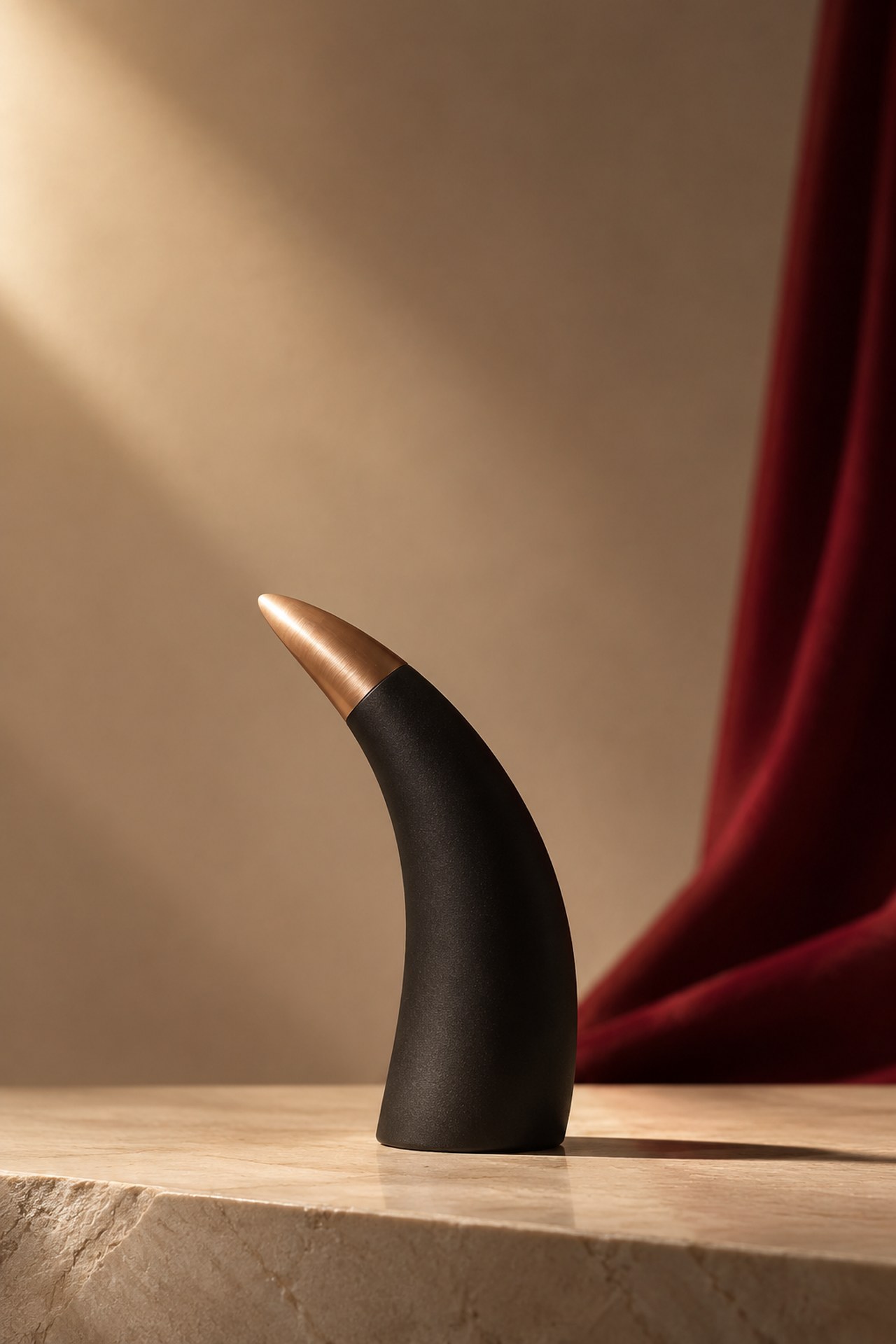
Machined aluminium and coated ABS are the third family. They are light, durable, and easy to clean, but they feel cooler and less forgiving. In our own range we use metal only as a detail — a band, a tip — rather than as the main body, because the temperature difference is noticeable in a way that most people do not expect.
Ignore the pattern count
Eight intensities and three patterns sounds like more choice than three intensities and no patterns. In practice, most people find one setting within the first fortnight and stay there. What actually varies between devices is the quality of the motor at the low end of its range: whether the slowest setting is a smooth pulse or a coarse buzz. This is the specification that no one publishes and the one that matters most.
If you can, choose a device with a continuous control rather than discrete steps. A dial or a slider lets you find the exact point where the sensation is right; buttons force you to choose between the step below and the step above, and the right point is often between them.
Think about noise before you think about power
Sound is the most under-reported attribute in the category, and for anyone living with other people it is the deciding one. A device that is quiet at its lowest setting is more useful than a stronger one that can be heard through a door. As a rough guide, a well-damped motor at low speed should be quieter than a conversation in the next room; if a product page does not mention noise at all, assume it is average.
Noise is also a design problem rather than only a motor problem. A hard shell amplifies vibration; a weighted base dampens it. This is why the heaviest piece in a range is often the quietest, and why small travel devices tend to be the loudest relative to their size.
Decide where it will live before you buy
This sounds trivial and is not. Objects that are visible get used; objects that require a ritual of retrieval get used less. If your living situation allows a shelf or a bedside table, buy for that: a piece that looks like an object rather than a gadget, in a material you do not mind seeing. If it has to be hidden, then the case matters as much as the device, and a hard case with a proper lining will protect the surface far better than a fabric pouch.
Storage also affects longevity. Silicone stored in contact with other silicone for long periods can bond at the surface. Ceramic stored loose in a drawer will eventually chip. Both problems are solved by a case or a tray, which is why we treat accessories as part of the purchase rather than an upsell.
A short checklist before you order
- Shape: broad for a first piece, narrow only if you already know you want concentration.
- Material: platinum-cured silicone for softness, ceramic for weight and warmth, metal as a detail.
- Base: flat and weighted if it will stand on a shelf.
- Control: continuous if possible, single button if not.
- Noise: check for a stated low-setting figure; assume average if unstated.
- Charging: magnetic contacts are more durable than a recessed pin socket.
- Water resistance: IPX7 if you want to rinse it under a tap; IPX6 if a damp cloth is enough.
- Storage: budget for a case or a tray at the same time, not later.
What to do in the first week
Charge it fully, wash it, and use it alone before using it with anyone else. This is not a rule about propriety; it is practical. You cannot explain what you like to another person until you know, and the first session with a new object is usually exploratory rather than conclusive. Give it three or four tries before you decide whether the shape suits you — the first impression of a new sensation is almost always wrong in one direction or the other.
If it does not work, most of the reason will be shape or noise rather than power, and both are worth returning for. A catalogue that lets you exchange an unopened piece within thirty days is more valuable than one that offers a longer warranty on a device you will never use.
And if you take one thing from this guide: the object you will still be using in a year is the one that fits your room, your hand, and your patience — not the one with the highest number on the box.